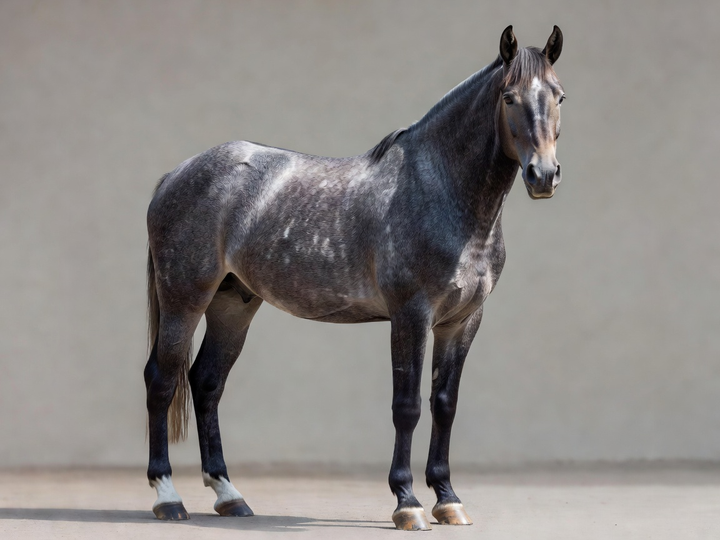
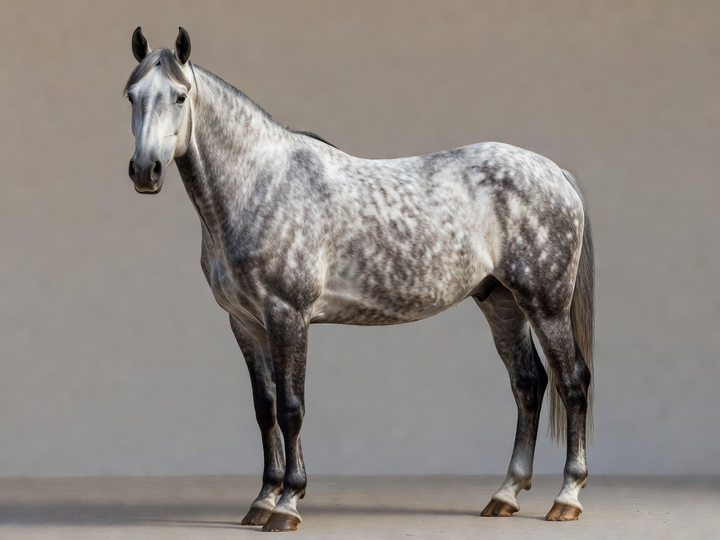
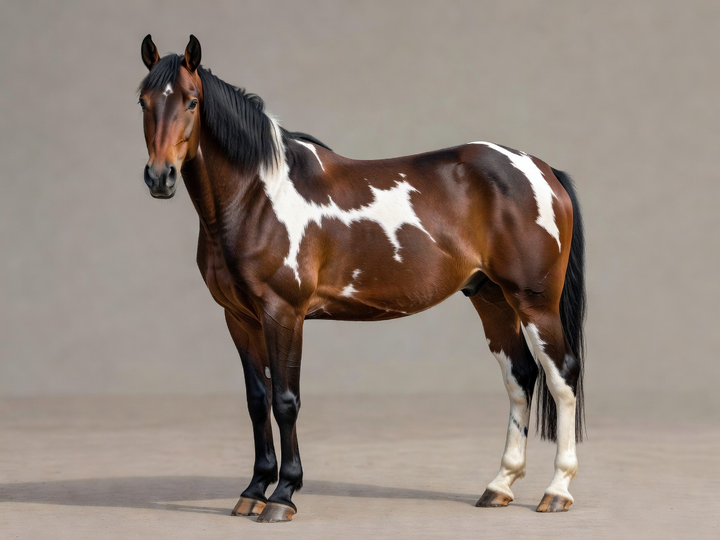
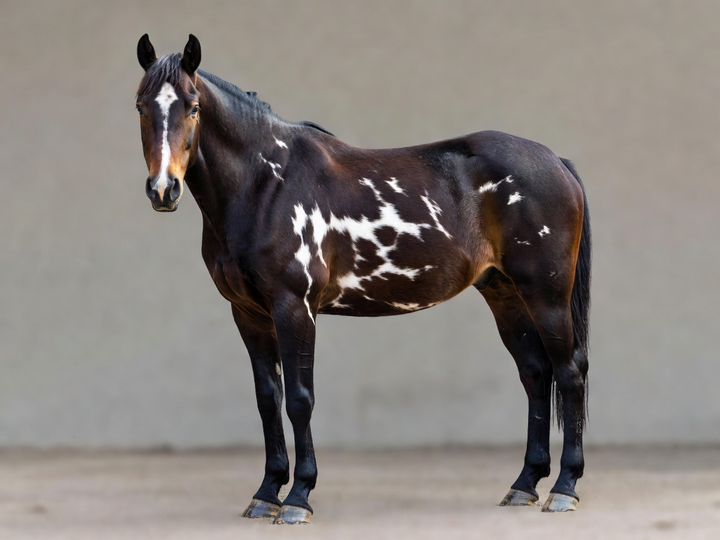
Built for everyday breeders, owners, and handlers who want practical answers, not a laboratory manual. Enter what you know about two parents and see likely offspring colors, and get calm guidance when a mating carries a known genetic risk.
Results use well-studied Mendelian* patterns. Individual foals can still surprise you.
Safety without scare tactics
Get clear, context-aware guidance when planning a mating or navigating an existing pregnancy involving Frame Overo*carrier* crosses.
A Note From the Pasture
The Personal Side of Color
The Hopes We Carry Into Breeding
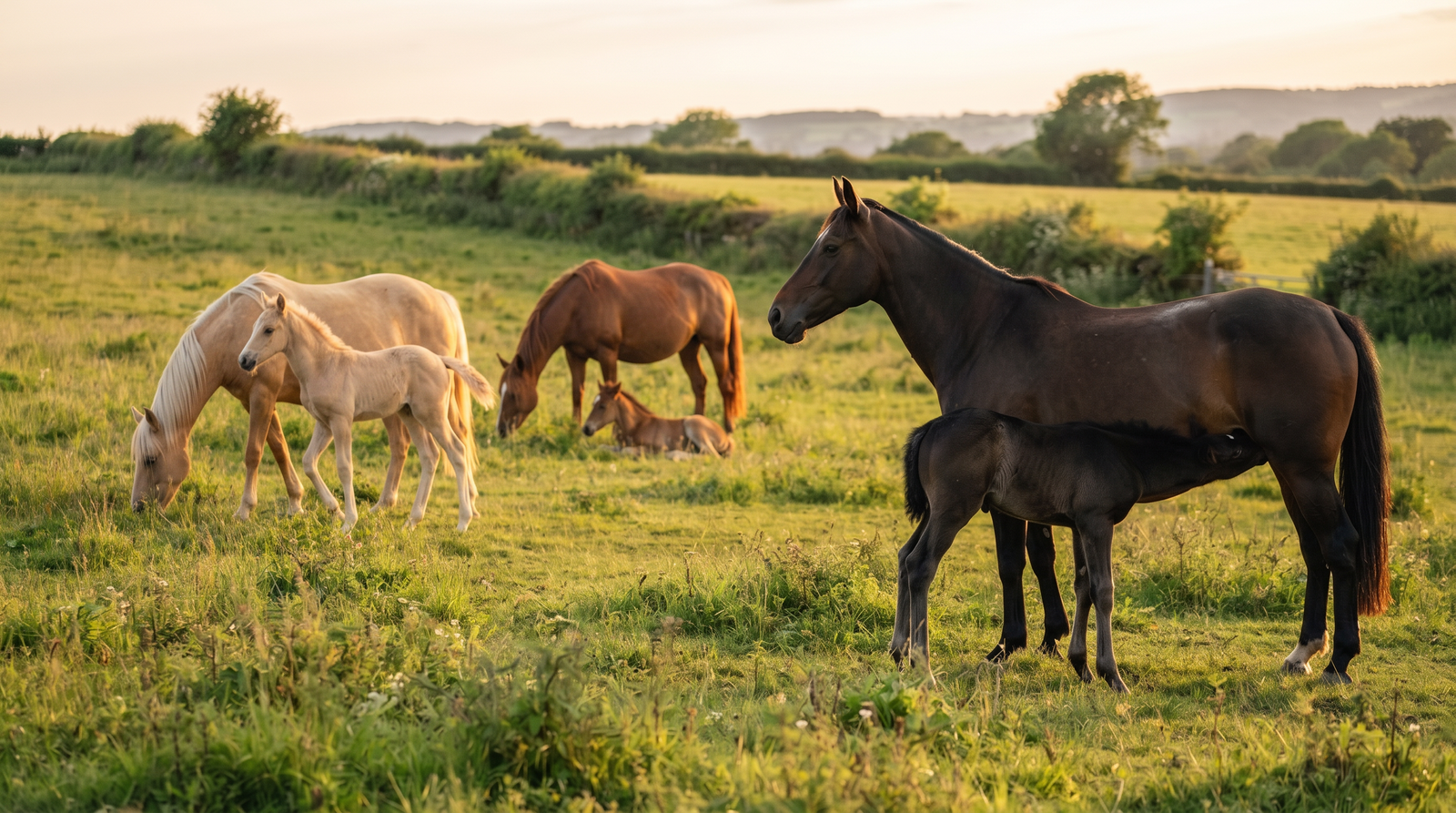
Color can matter because it is tied to a memory, a promise, or a picture someone has carried for years. A child may dream of having a golden palomino, like Trigger, or a beautiful black stallion, like Walter Farley's "The Black." A trainer may be watching for that next bay who runs like American Pharoah. We know a horse doesn't have to be flashy to fulfill a dream. A family may just want a foal that reminds them of the horse who started it all for them. And we get it. We want to help with your wish.
For an owner, the hope may be to sit beside a cherished broodmare having her last foal. She may have shaped a breeding program, carried a family through hard seasons, or given someone a once-in-a-lifetime partner. Hoping for a particular color gives the story another thread, while the mare and foal remain at its heart.
Prediction helps turn that hope into something you understand. By looking at what each parent can pass on, you will see the likely colors, the less common possibilities, and the surprises that remain. The Predictor gives you a clearer map before the foal arrives, while leaving room for the moment no chart can replace: meeting your special foal.
Write to us
Share your story with us
We'd love to hear your story, your opinion, your hope! Share with us what brought you to Foal Color Predictor, and tell us what you're hoping for. Interested families are welcome to include your young people's writing, and maybe even some artwork or pictures. For our business- and professionally oriented audience, please feel free to give us some specifics about what your goal is here at Foal Color Predictor. We'll let everyone know when we receive your letter, and then we will follow up.
Your story and email will be saved so the team can review your note. You’ll see a confirmation once the save completes.
Visual identification
Coat Guide for the Colors This Tool Names
Use these cards as a barn-side reference. Light, dirt, season, and stacked patterns can fool the eye. Appearance helps you ask better questions; DNA confirms genotype*.
Field rule: if two colors could fit, write both down and test. Minimal Frame*carriers* and smoky blacks are classic look-alike traps.
Horse photo unavailable for this color.
Chestnut
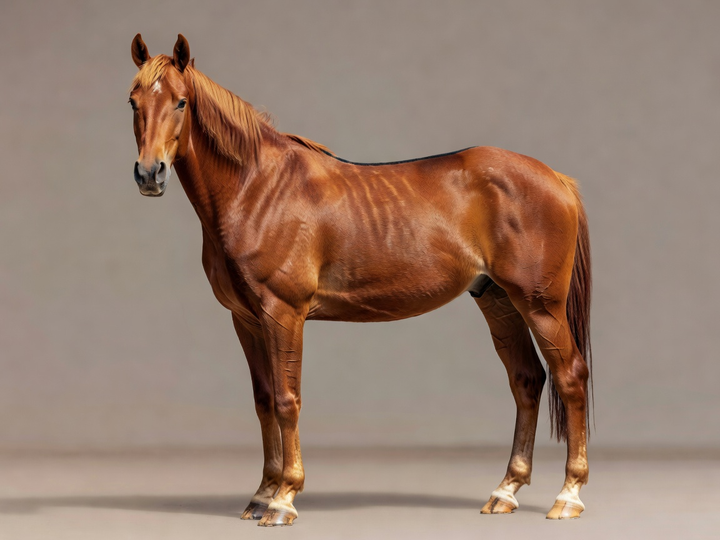
Red to liver body with a mane and tail the same shade or lighter. No true black points.
Appearance clues
Body ranges from light sorrel to deep liver
Mane and tail red, flaxen, or darker red, not black
Legs match the body rather than showing black points
Common look-alikes
Red dun* (look for dorsal stripe and leg bars). Some dark chestnuts are mistaken for bay.
Genotype* pathway: e/e. Agouti* does not change the visible coat on chestnut. Appearance cannot confirm genotype* on its own.
Horse photo unavailable for this color.
Bay
Brown to reddish body with black mane, tail, and lower legs (black points).
Appearance clues
Clear black points on legs, mane, and tail
Body color from light bay to blood bay or dark bay
No progressive silvering unless Gray* is also present
Common look-alikes
Brown/seal bay vs black can be tricky in photos. Buckskin is bay plus cream*.
Needs at least one E and at least one A. Appearance cannot prove the exact alleles*. Appearance cannot confirm genotype* on its own.
Horse photo unavailable for this color.
Black
True black body, mane, and tail without bay-red burnishing when clean and in good light.
Appearance clues
Uniform black coat when free of sun fade
No tan or red bay body contrast
May fade or sunburn reddish. Check winter coat when unsure
Common look-alikes
Smoky black (single cream*) can look nearly identical without a test. Faded black vs dark bay.
E/_ with a/a. Cream* can hide in plain sight on black. Appearance cannot confirm genotype* on its own.
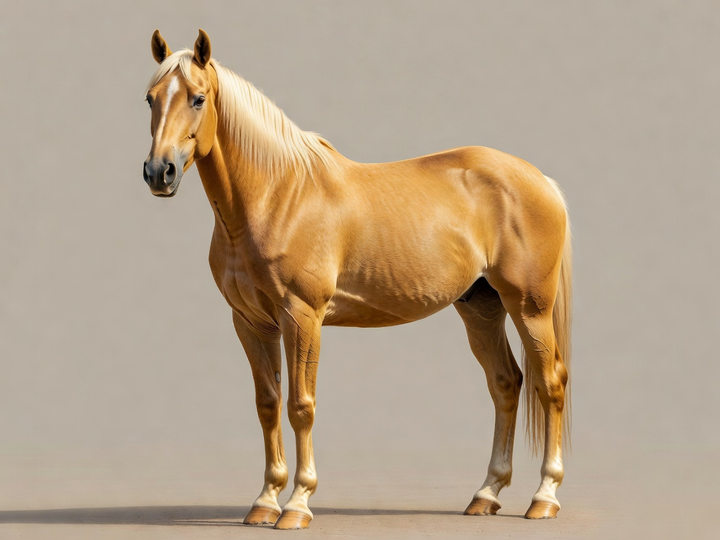
Palomino
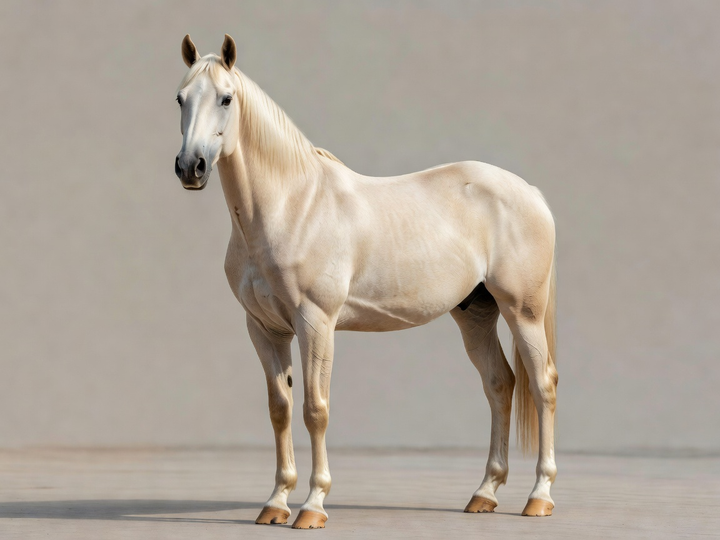
Golden body with a white or near-white mane and tail. Chestnut plus one cream* copy.
Appearance clues
Gold to yellow body
Flaxen or white mane and tail
Skin usually dark except under white markings
Common look-alikes
Light chestnut with flaxen mane, champagne, or very light bay can confuse the eye.
Chestnut base + N/Cr. DNA confirms cream* when shade is ambiguous. Appearance cannot confirm genotype* on its own.
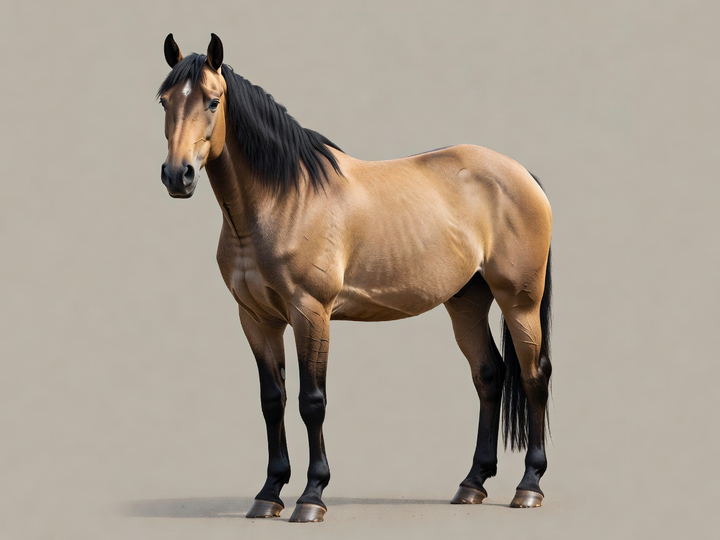
Buckskin
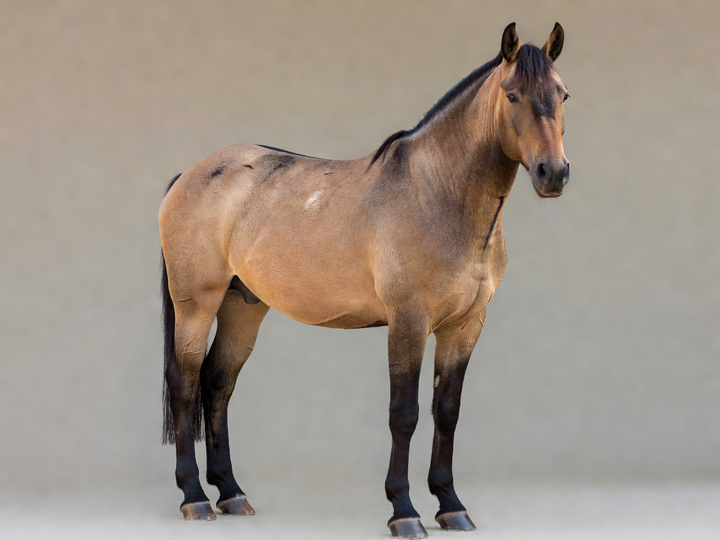
Tan to gold body with black points. Bay plus one cream* copy.
Appearance clues
Body lighter than typical bay
Black mane, tail, and legs retained
No dorsal stripe required (that points more toward dun*)
Common look-alikes
Bay dun* / classic dun* (stripe and leg bars). Some sooty bays.
Bay base + N/Cr. Dunskin is buckskin with dun* markings. Appearance cannot confirm genotype* on its own.
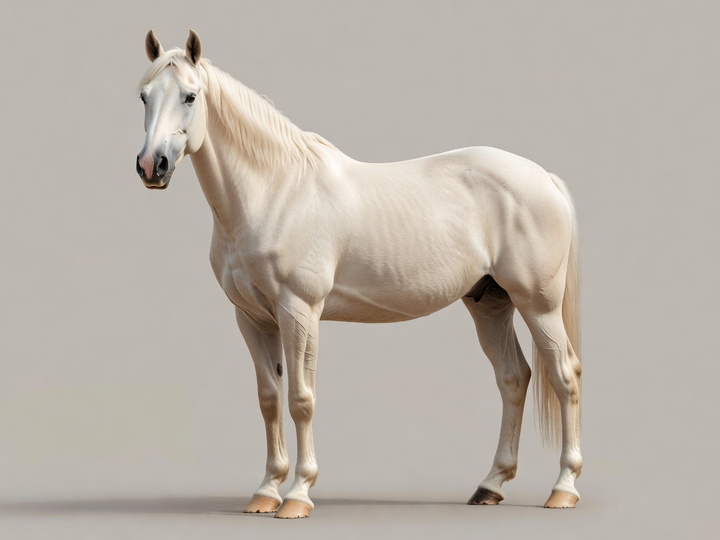
Cremello
Very pale cream* body, white mane and tail, light skin and blue eyes. Chestnut with two cream* copies.
Appearance clues
Near-white to ivory coat
Pink skin and blue eyes are common
Healthy double dilute*, not an LWO* diagnosis
Common look-alikes
Perlino and smoky cream* are hard to tell apart by eye. Some dominant* white horses look white for other reasons.
Cr/Cr on chestnut. Double cream* is viable and is not Lethal White Overo*. Appearance cannot confirm genotype* on its own.
Perlino
Pale cream* body often with a slightly darker mane and tail. Bay base with two cream* copies.
Appearance clues
Ivory body, mane/tail may look a shade richer
Light skin, often blue eyes
Points are diluted rather than jet black
Common look-alikes
Cremello and smoky cream*. Testing separates them cleanly.
Cr/Cr on bay. Still a healthy double dilute*, not LWO*. Appearance cannot confirm genotype* on its own.
Smoky Cream*
Pale cream*double dilute* on a black base. Often confused with cremello without a test.
Appearance clues
Very light cream* coat
May show slightly smokier tones than cremello
Blue eyes and light skin are common
Common look-alikes
Cremello and perlino. Visual ID alone is unreliable among double dilutes*.
Cr/Cr on black. Viable double cream*, not Lethal White*. Appearance cannot confirm genotype* on its own.
Red Dun*
Peach to clay-red body with a dorsal stripe and often leg barring on a chestnut base.
Appearance clues
Dorsal stripe down the back
Leg bars or shoulder shadows are common
Mane and tail usually not black
Common look-alikes
Plain chestnut with countershading. True dun* leaves clearer primitive marks*.
Chestnut + Dun* (D/_). Appearance cannot confirm genotype* on its own.
Bay Dun*
Tan to olive-bay body, black points, dorsal stripe, and leg barring.
Appearance clues
Clear dorsal stripe
Black points plus zebra-like leg bars
Body often more muted than bright bay
Common look-alikes
Buckskin without dun* marks. Sooty bay.
Bay + Dun*. With cream*, names shift toward dunskin. Appearance cannot confirm genotype* on its own.
Grullo
Mouse-gray* to slate body with dark points and dun*primitive marks* on a black base.
Appearance clues
Even slate or smoky body
Dark head and primitive marks*
Not the same as progressive Gray*
Common look-alikes
Gray* (progressive silvering), smoky black, roan.
Black + Dun*. Gray* is a different gene that lightens over years. Appearance cannot confirm genotype* on its own.
Gray*
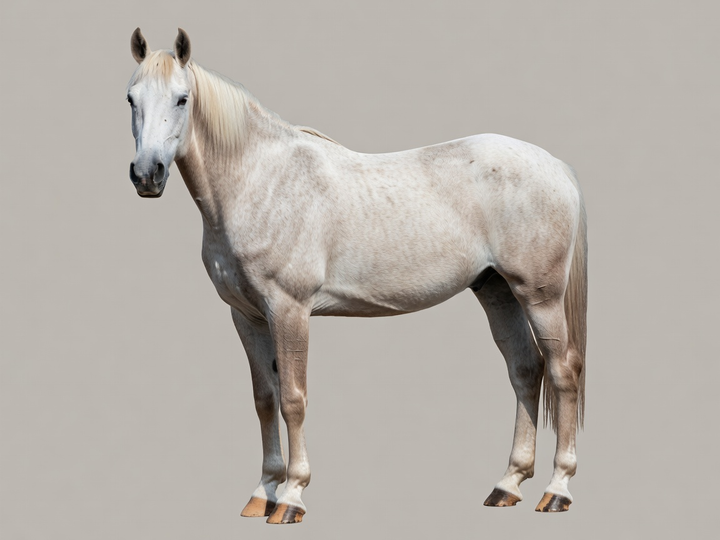
Born any base color*, then progressively silvers. Many end nearly white with dark skin.
Appearance clues
Foal coat matches the underlying color first
White hairs increase each year
Skin stays dark unless other white patterns are present
Common look-alikes
Sabino roan, true white patterns, or heavily faded coats.
G/_ is dominant*. Homozygous*Gray* is not LWO*. Gray* can hide the birth color later. Appearance cannot confirm genotype* on its own.
Tobiano*
Smooth, often rounded white patches that commonly cross the topline, with white legs and a mostly dark head.
Appearance clues
White crossing the back is common
Legs often white; head usually darker with normal markings
Patch edges tend to be smooth rather than jagged
Common look-alikes
Other white patterns (overo types, sabino, splash). More than one pattern can stack.
TO/_ is dominant*. TO/TO is healthy and not Lethal White*. Appearance cannot confirm genotype* on its own.
Frame Overo*
White often appears to frame* colored areas along the sides; the back may stay dark. Expression ranges from bold to nearly solid.
Appearance clues
Side-oriented white with a darker topline is classic when marks show
Blue eyes can occur
Some N/O carriers* are minimally marked or look solid
Common look-alikes
Other overo-type patterns. Minimal carriers* look like ordinary solid horses.
N/O is a healthy carrier*. O/O causes Lethal White Overo Syndrome*. Never rely on looks alone. Test for EDNRB* before breeding decisions. Appearance cannot confirm genotype* on its own.
Think in layers. Base color* is decided first. Dilutes* rename the coat. Dun* leaves marks. Gray* and white patterns can cover the story later. Frame*carrier* status is mostly a breeding-safety question, not a paint chip.
Example: a bay horse with one cream* copy is often called buckskin. Add dun* and many people say dunskin. Add gray* and the adult coat may look nearly white years later.
1
Base color* first
Extension* decides if black pigment is possible. Agouti* then places that black on the points (bay) or across the body (black). Chestnut horses (e/e) stay red regardless of Agouti*.
2
Cream* changes the name
One cream* copy turns chestnut into palomino, bay into buckskin, and black into smoky black. Two copies make cremello, perlino, or smoky cream*. Those double dilutes* are healthy.
3
Dun* adds a signature
Dun* lightens the body and leaves primitive marks*: a dorsal stripe, leg barring, and sometimes shoulder stripes. It stacks with cream* and any base color*.
4
Gray* and patterns layer on top
Gray* foals are born colored and lighten with age. Tobiano* adds a white spotting pattern. Frame Overo* can add white too, but the serious breeding issue is the hidden LWO* risk when two carriers* are crossed.
5
Unknown means test, not guess
When a locus* is unknown, this tool widens the outcome list instead of inventing false precision. Parent DNA tests from a reputable lab turn open questions into clear percentages.
Mating workbench
Explore the Likely Foal Coat Colors
Choose whether you are planning a mating or already expecting a foal. That choice only changes safety wording if a Frame Overo*carrier* cross is detected. Coat probabilities use the same genetics either way.
Breeding context
Planning mode emphasizes avoiding high-risk Frame*carrier* crosses before breeding.
Genes in this release
Seven practical loci*
Enough to name common bases, dilutes*, and patterns without drowning you in rare variants.
Extension* & Agouti*
Chestnut, bay, black foundations
Cream* & Dun*
Palomino, buckskin, cremello, grullo, and more
Gray* & Tobiano*
Progressive graying and classic pinto pattern
Frame Overo* (LWO*)
Carrier* status and Lethal White* risk checks
Working name for this first release. Predictions are educational and are not veterinary advice or a registry endorsement.
Stallion
Sire genotypes* you know from testing or reliable records
Input source
Mare
Dam genotypes* you know from testing or reliable records
Input source
All seven loci* are set for both parents. You can calculate a focused probability set.
Results appear here
Ready when you are
Set the stallion and mare genetic results above, or choose a visible base color* for either parent, then calculate. You will see ranked coat outcomes with percentages, a short explanation for each, inherited-trait notes, and any Frame Overo* safety guidance that applies.
A sample bay-leaning cross is preselected so you can explore the predictor right away. Change any values before calculating.
Terms marked with * are explained below. Use this section as a quick barn-side reference while you compare parent records and prediction results.
Allele
One version of a gene at a locus. A foal receives one allele from each parent, such as E and e at Extension.
Base color
The underlying chestnut, bay, or black pathway before genes such as Cream, Dun, Gray, or white patterns change the final look.
Agouti
The ASIP locus that helps place black pigment. In this model, A/A or A/a usually keeps black on the points for bay, while a/a allows black across the body; it does not change a chestnut horse.
Carrier
A horse that has an allele it can pass to a foal, sometimes without an obvious visible sign. In this tool, N/O means a healthy Frame Overo carrier.
Cream
The SLC45A2 dilution gene. N/Cr is one copy and Cr/Cr is two copies, which lightens a horse's base color more strongly.
Dilute / dilution
A gene effect that lightens a base coat and can change its color name. Cream and Dun are the dilutions modeled here.
Double dilute
A horse with two copies of a dilution variant. In this tool, Cr/Cr can produce cremello, perlino, or smoky cream, and is viable.
Dominant
A pattern or variant that can affect appearance when a horse has one copy. A dominant result can still depend on the gene and the horse's other alleles.
Dun
A dilution that lightens the body and often adds a dorsal stripe, leg barring, or shoulder stripes called primitive markings.
EDNRB
The gene tested for the Frame Overo variant in this tool. N/O is one copy, while O/O is the two-copy combination associated with LWO.
Extension
The MC1R, or red-factor, locus that controls whether black pigment can form. A horse with e/e is chestnut in this model.
Frame Overo
A white-pattern type linked to EDNRB. N/O horses can be healthy carriers with little white; O/O is the risk combination for LWO.
Genotype
The allele combination a horse carries at one gene or across several genes, such as N/O or Cr/Cr. Testing reveals genotype.
Gray
A dominant progressive-graying variant. Foals start with an underlying color and add white hairs over time, often becoming much lighter as adults.
Heterozygous
Having two different alleles at a locus, such as N/O, N/Cr, or G/g.
Homozygous
Having two matching alleles at a locus, such as Cr/Cr, G/G, or TO/TO.
Lethal White Overo Syndrome / LWO
A serious inherited condition associated with O/O, when a foal receives the Frame allele from both parents. Affected foals are typically born mostly white and have incomplete intestinal nerves. The tool checks this risk in an N/O × N/O cross.
Locus / loci
A gene's position or region on a chromosome. Locus is singular and loci is plural; this predictor tracks seven coat-color loci.
Mendelian inheritance
The basic rule that a foal receives one allele from each parent. The tool uses these inheritance probabilities to estimate possible outcomes, not to promise one foal's result.
Phenotype
The visible result, such as a coat color or white pattern. Phenotype is shaped by genotype, age, environment, and genes outside this tool.
Primitive markings
Dun-associated markings such as a dorsal stripe, leg bars, and sometimes shoulder stripes. They can help identify Dun but are not a DNA test.
Tobiano
A dominant white-spotting pattern with smooth patches that often cross the back and white legs. TO/TO is healthy in this tool.
Trusted References
These references include university genetics resources, a veterinary manual, and peer-reviewed research. They cover different subjects, from coat-color inheritance and LWO testing to veterinary context for inherited skin conditions. For DNA test choices or result interpretation, consult a genetics laboratory. Ask your veterinarian about health or clinical decisions.